|
I am currently in the MSCS program at UIUC, advised by Prof. Jiaxuan You. I am also a researcher in the MIT Brain and Cognitive Sciences department, working with Prof. Evelina Fedorenko in the EvLab. I received my B.A. in Mathematics and Computer Science from Carleton College, a leading liberal arts college in the US. During my undergrad, I was fortunate to work with Prof. Anima Anandkumar in the Anima AI+Science Lab at Caltech. 韩芃睿 / Email / Google Scholar / GitHub / LinkedIn / Twitter |

|
|
[Sep 2026] Honored to be named a Siebel Scholar, Class of 2027! |
|
My research is broadly driven by questions about intelligence and cognition. As AI systems develop increasingly complex cognitive abilities and behaviors, I am particularly interested in two directions: (1) Using AI to study intelligence. AI systems provide unique experimental objects for studying the principles underlying intelligence: they exhibit many of the cognitive abilities we have traditionally studied in humans, while their behavior, self-reports, and internal computations can all be observed and experimentally intervened upon. (2) AI evaluation and safety. As these systems become increasingly capable, I want to develop rigorous ways to evaluate, understand, and monitor their behavior and internal processes, ultimately helping make AI systems safer and better aligned. My research across these directions often combines behavioral evaluation, mechanistic interpretability, AI alignment, and insights from cognitive science and neuroscience:
If any of this resonates with your interests, feel free to reach out and let's connect / collaborate! |

|
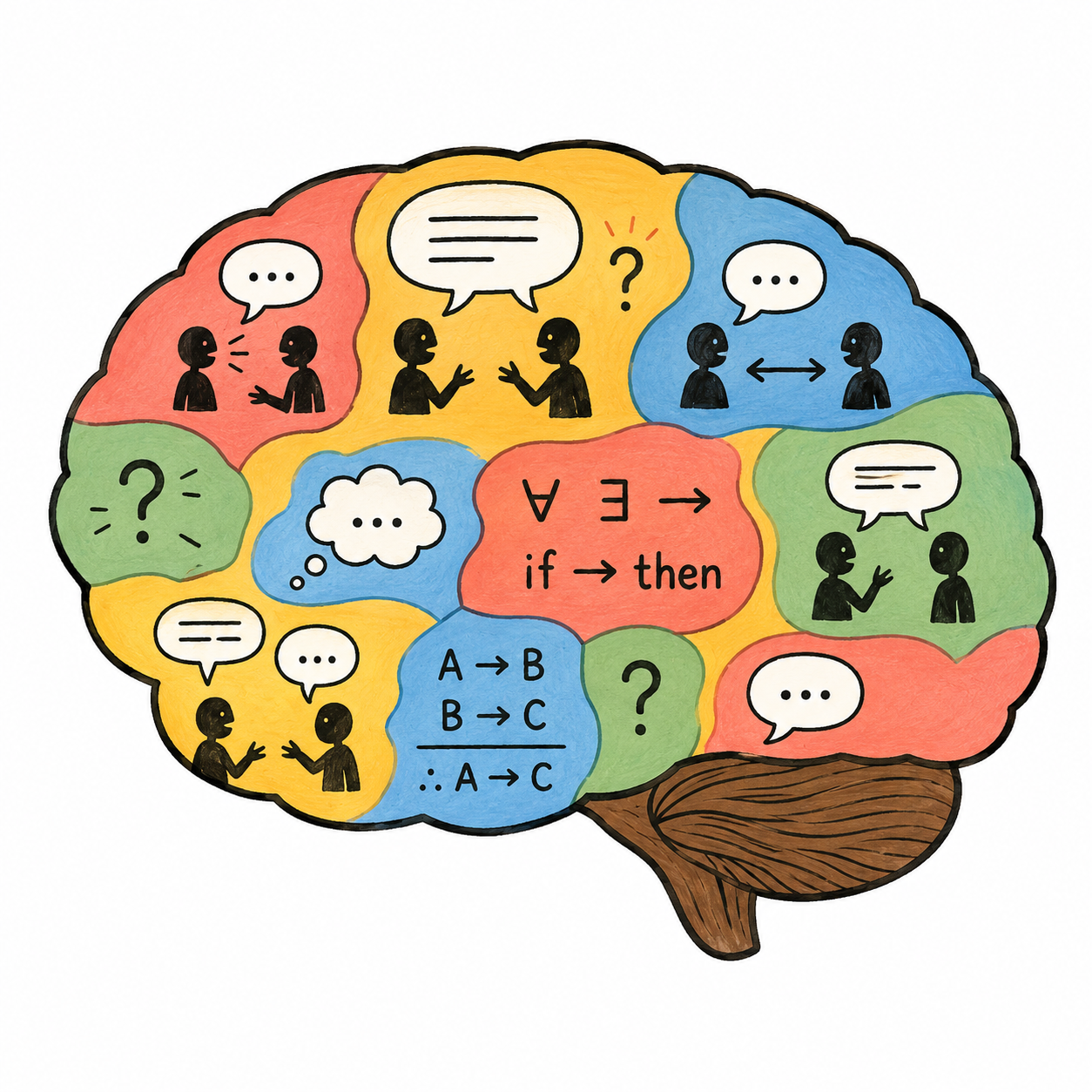
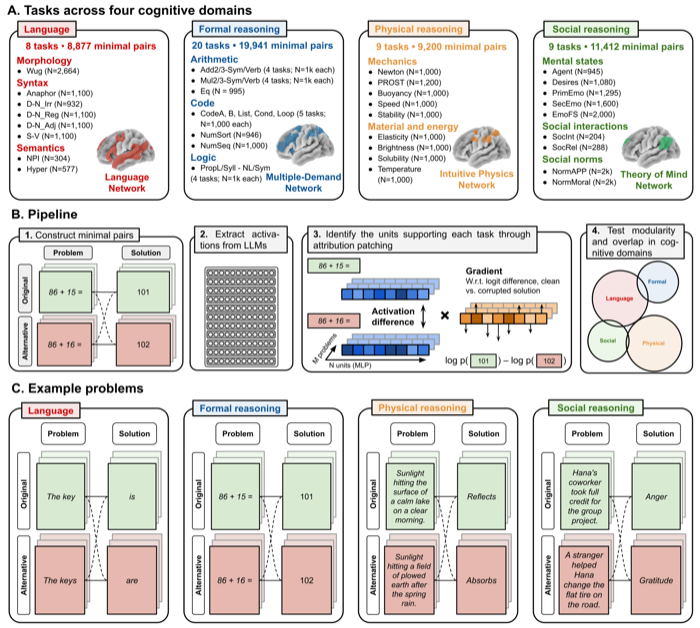
Pengrui Han, Jacob Andreas, Evelina Fedorenko†, and Andrea Gregor de Varda† († Co-senior Authors) Preprint, 2026 project / code / manuscript / thread Through circuit analyses across 46 tasks spanning language, formal reasoning, social reasoning, and physical reasoning, we find that LLMs develop a modular cognitive architecture mirroring the human brain: tasks drawing on the same network in humans recruit overlapping neurons in LLMs, whereas tasks drawing on different networks recruit distinct neurons. Modularity may be a fundamental principle of intelligent systems rather than a biological accident. |
|
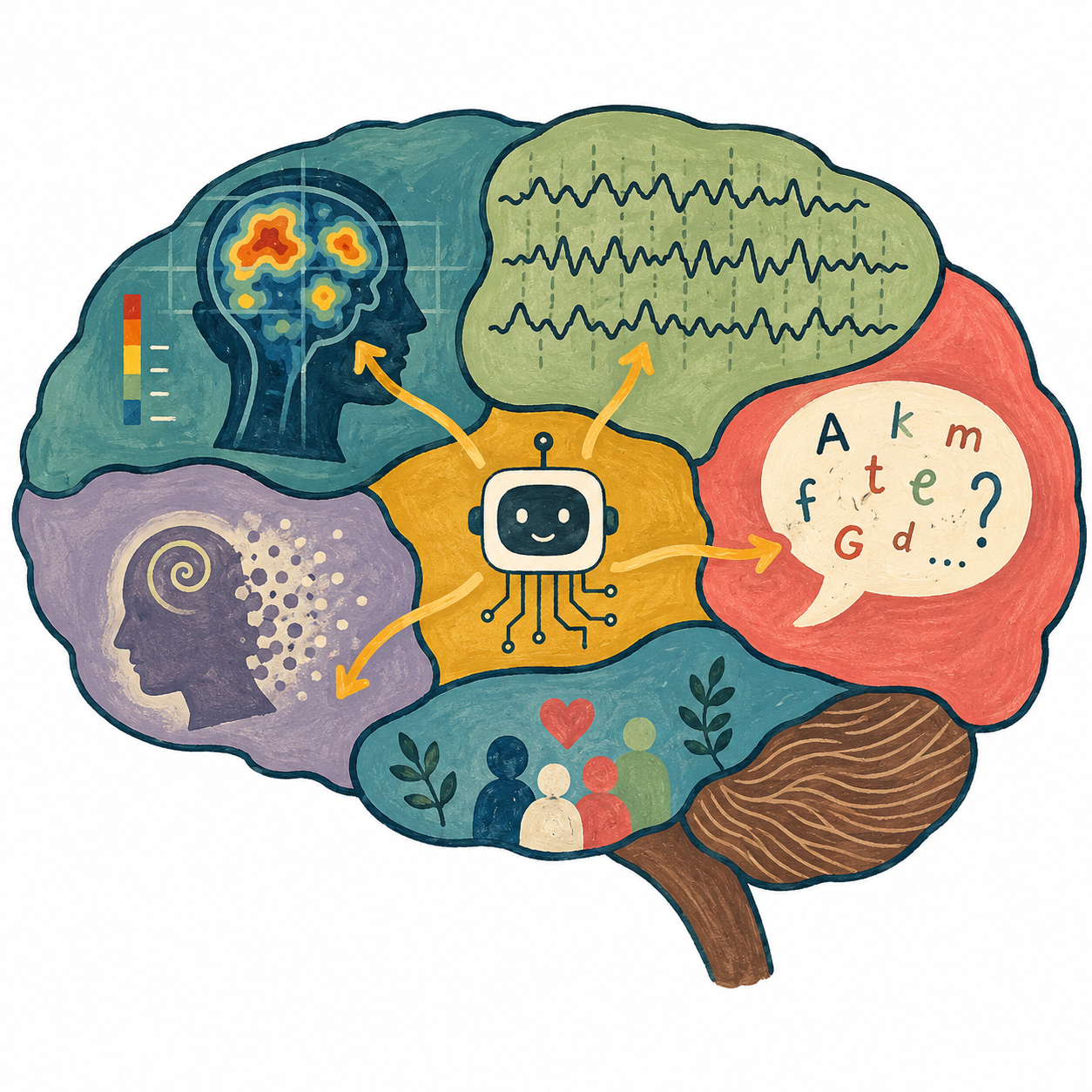
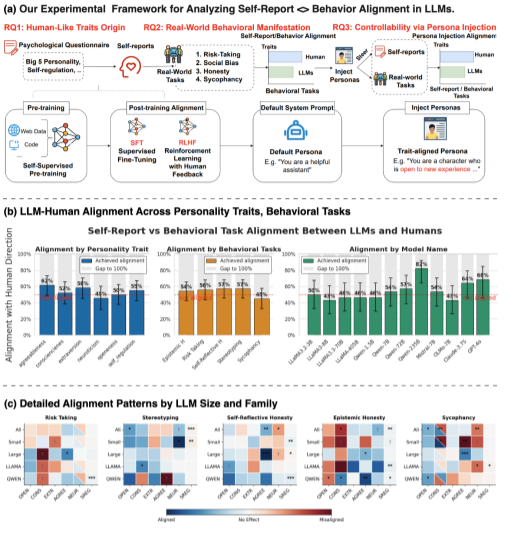
Rafal D. Kocielnik, Pengrui Han, Peiyang Song, Myrl G. Marmarelis, Ramit Debnath, Dean Mobbs, Anima Anandkumar, and R. Michael Alvarez Conference on Neural Information Processing Systems (NeurIPS), 2026 ICML CTB Workshop, 2026, Best Paper Award arXiv / project / code Anticipating LLM behavioral tendencies from low-cost psychometric probes is critical for safe deployment, but only if self-reports reliably predict behavior. We compare broad Big 5 traits with the Theory of Planned Behavior, which targets intentions toward specific behaviors and better predicts when self-reports translate into action. |
|
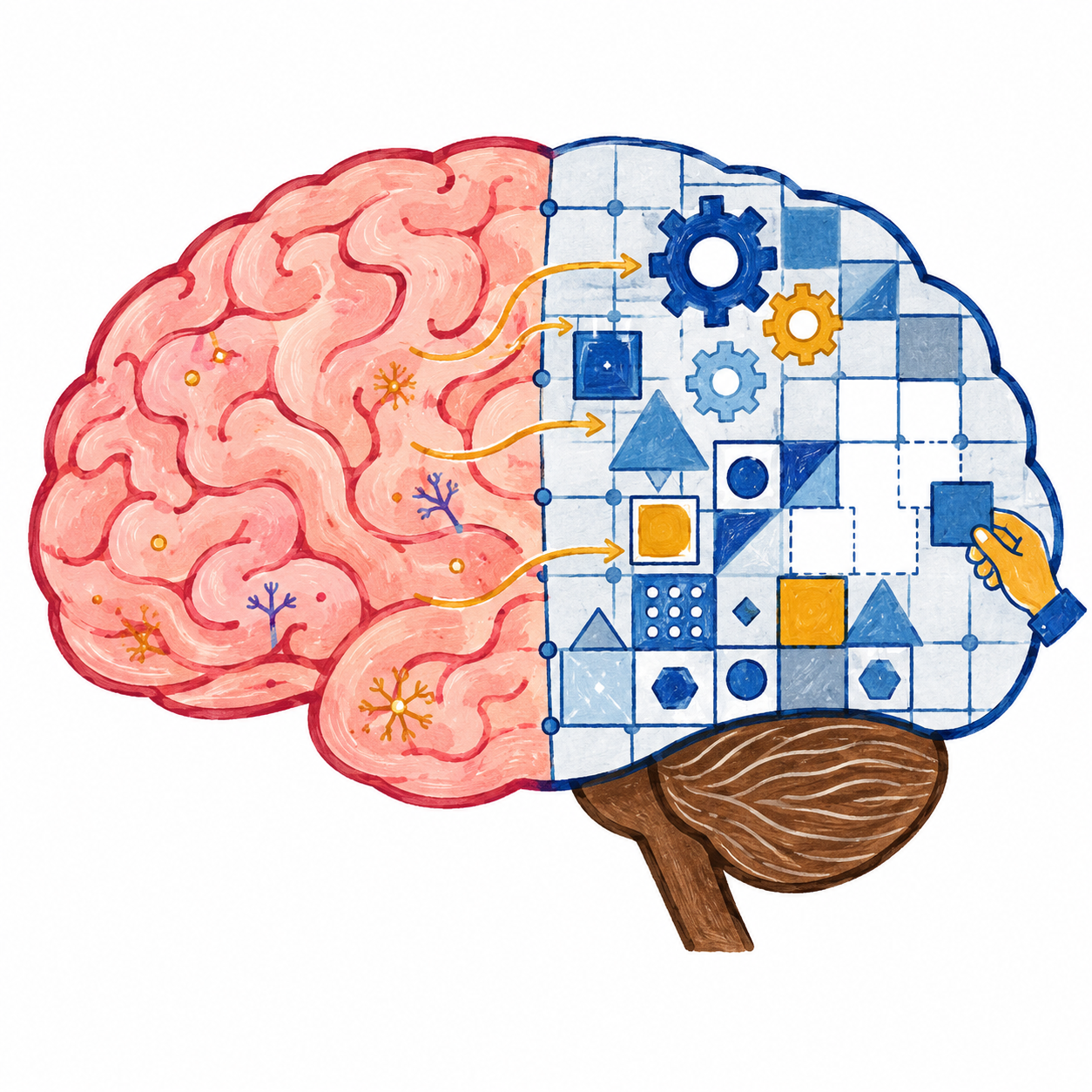
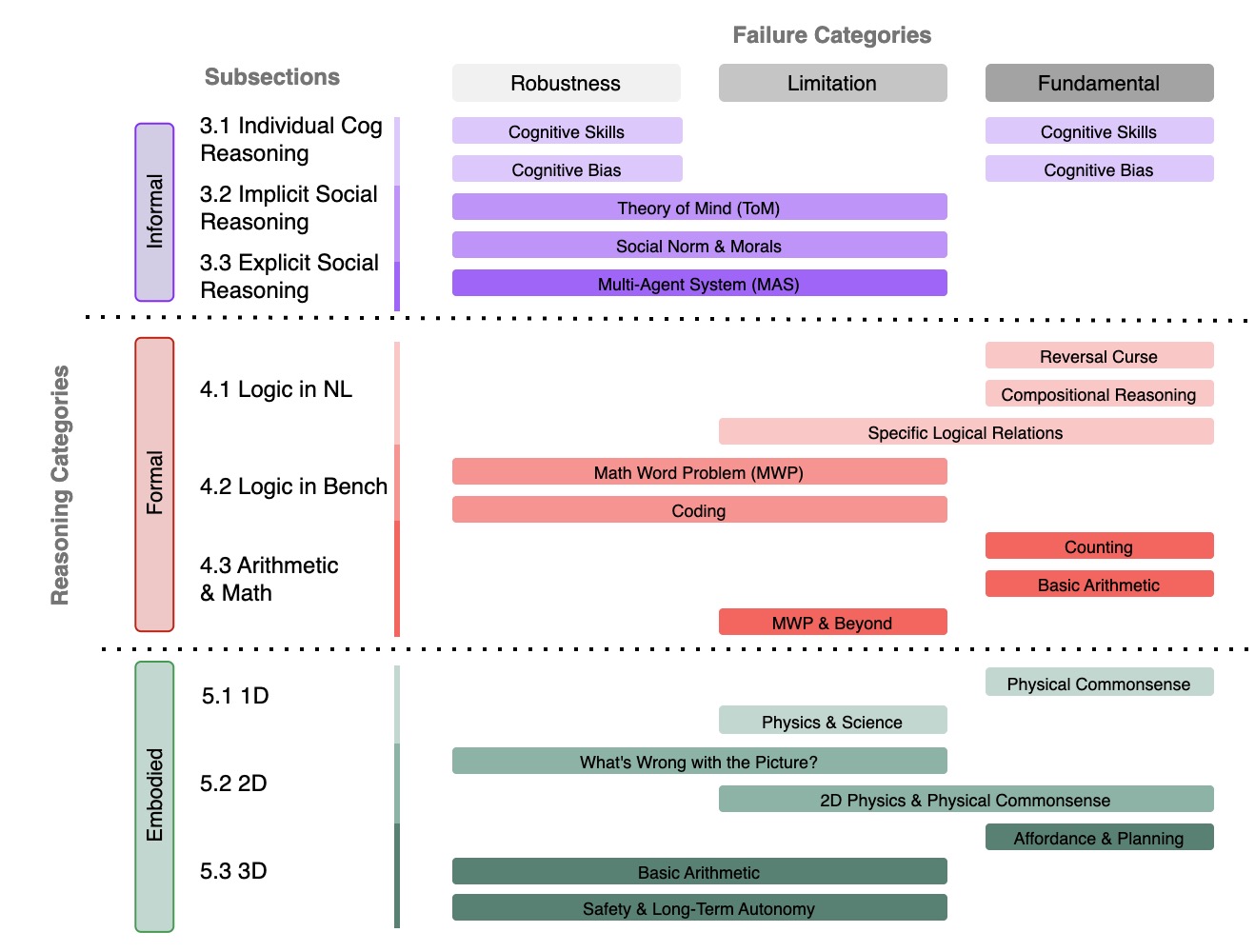
Pengrui Han*, Rafal D. Kocielnik*, Peiyang Song, Ramit Debnath, Dean Mobbs, Anima Anandkumar, and R. Michael Alvarez (* Equal Contribution) International Conference on Machine Learning (ICML), 2026 NeurIPS LAW Workshop, 2025, Best Paper Honorable Mention arXiv / project / code / media What LLMs say about themselves does not predict what they do: coherent self-reports come apart from behavioral dispositions. This cautions against taking fluent self-description as evidence of a coherent underlying self-model, and calls for deeper behavioral and mechanistic evaluation in AI alignment and interpretability. |
|
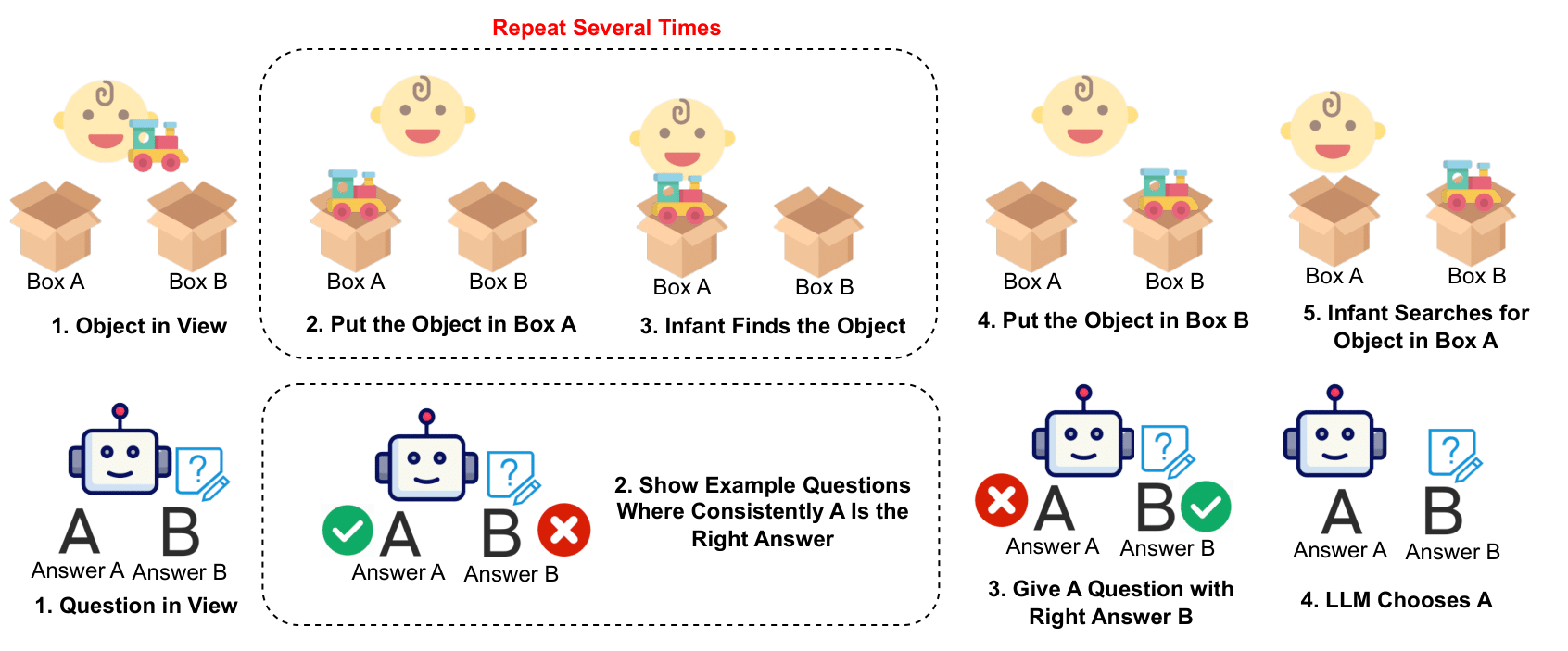
Peiyang Song*, Pengrui Han*, and Noah Goodman (* Equal Contribution) Transactions on Machine Learning Research (TMLR), 2026, Survey Certificate arXiv / code / proceeding / media We present the first comprehensive survey dedicated to reasoning failures in LLMs. By unifying fragmented research efforts, our survey provides a structured perspective on systemic weaknesses in LLM reasoning, offering valuable insights and guiding future research towards building stronger, more reliable, and robust reasoning capabilities. |

|
Pengrui Han*, Peiyang Song*, Haofei Yu, and Jiaxuan You (* Equal Contribution) Findings of Empirical Methods in Natural Language Processing (EMNLP), 2024 arXiv / code / proceeding Motivated by the crucial cognitive phenomenon of A-not-B errors, we present the first systematic evaluation on the surprisingly vulnerable inhibitory control abilities of LLMs. We reveal that this weakness undermines LLMs' trustworthy reasoning capabilities across diverse domains, and introduce various mitigations. |
|
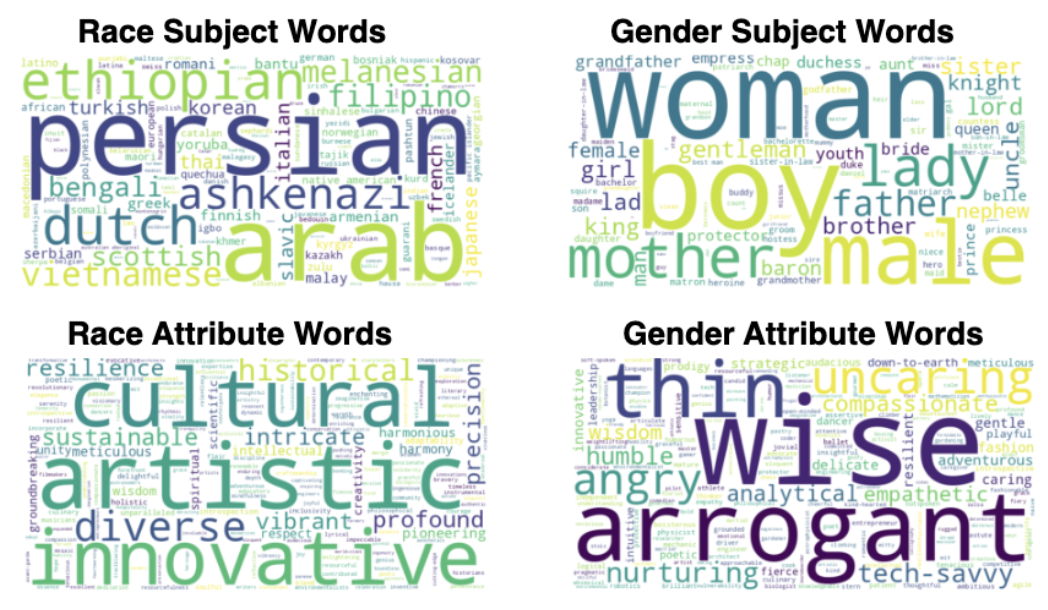
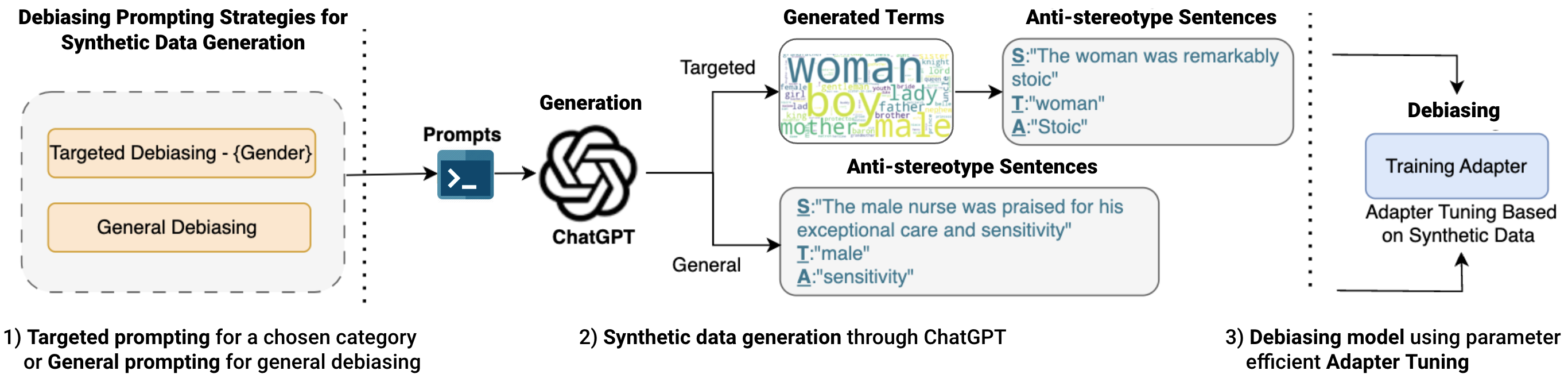
Pengrui Han*, Rafal Kocielnik*, Adhithya Saravanan,Roy Jiang, Or Sharir,and Anima Anandkumar (* Equal Contribution) Conference On Language Modeling (COLM), 2024 arXiv / code / proceeding We propose a light and efficient pipeline that enables both domain and non-domain experts to quickly generate synthetic debiasing data to mitigate specific or general bias in their models with parameter-efficient fine-tuning. |
|
|
|
|
|
Outside research, I play classical flute, hit the slopes any chance I can in winter, swim and play badminton year-round, and try to travel somewhere new every few months, usually somewhere with mountains or water. |






















|
|